For homeowners & villa projects
Buy Furniture for Your Whole House in China
Bring your rooms together with a coordinated buying plan. Agent Foshan helps you choose furniture and building materials, compare suppliers and organise purchases around your home’s layout, style and budget.

Start with your home, room by room
A whole house order involves more than choosing a sofa. Sizes, finishes and installation details need to work together before orders go to different suppliers. Share a floor plan and a room list so we can help organise the search in Foshan.
Living & dining
Sofas, occasional chairs, dining tables, storage and lighting. Check seating capacity, circulation space and how each piece will enter the home.
Bedrooms
Beds, mattresses, bedside tables and wardrobes. Confirm bed sizes, storage needs and finishes for each room.
Kitchens & bathrooms
Cabinetry, sanitaryware, tiles and stone. Your designer or installer should confirm site measurements, drawings and connections before approval.
Choose a buying plan that suits you
Visit showrooms and factories with our English- and Chinese-speaking team, or plan purchases from home with product details and supplier follow-up. Furniture industry experience in China since 2007 helps us guide your selection and communicate your requirements.
- Define the brief. List rooms, quantities, preferred styles, budget and delivery destination. Mark essentials separately from optional items.
- Compare the details. Review dimensions, materials, finishes, hardware and what each quote includes. Similar-looking products may have different specifications.
- Approve before ordering. Record the chosen model, colour, fabric and agreed changes. Use samples or drawings where needed.
- Check and coordinate. Arrange quality checks, supplier follow-up and combined shipping for items from different suppliers.
Plan the full cost and delivery
Keep product prices separate from service fees, packing, transport, freight, import charges and installation. Ask which costs are included in each quotation. The delivery plan should also account for access restrictions, fragile items and when your home is ready to receive goods.
For fitted products, confirm who will measure, approve drawings and install at the destination. A showroom purchase does not replace those site checks.
Before you start
Can furniture and building materials travel together?
They can be considered for a combined shipment, subject to supplier readiness, packaging, dimensions and transport requirements. We help review the order before the shipping plan is finalised.
Do I need to visit China?
You can visit Foshan or discuss a remote buying plan. A visit helps you compare comfort, colours and finishes in person; remote orders need clear specifications and approvals.
Planning a trip? Read our furniture buying trip guide. For fitted rooms, see the kitchen cabinet buying guide.
Plan a whole-house furniture order around the way you live
You may already have a room list and a clear idea of the style you want. The next step is deciding what to choose first, where custom work is worthwhile and which details need to be settled together. These decisions help turn a whole-house furniture purchase into a manageable series of choices.
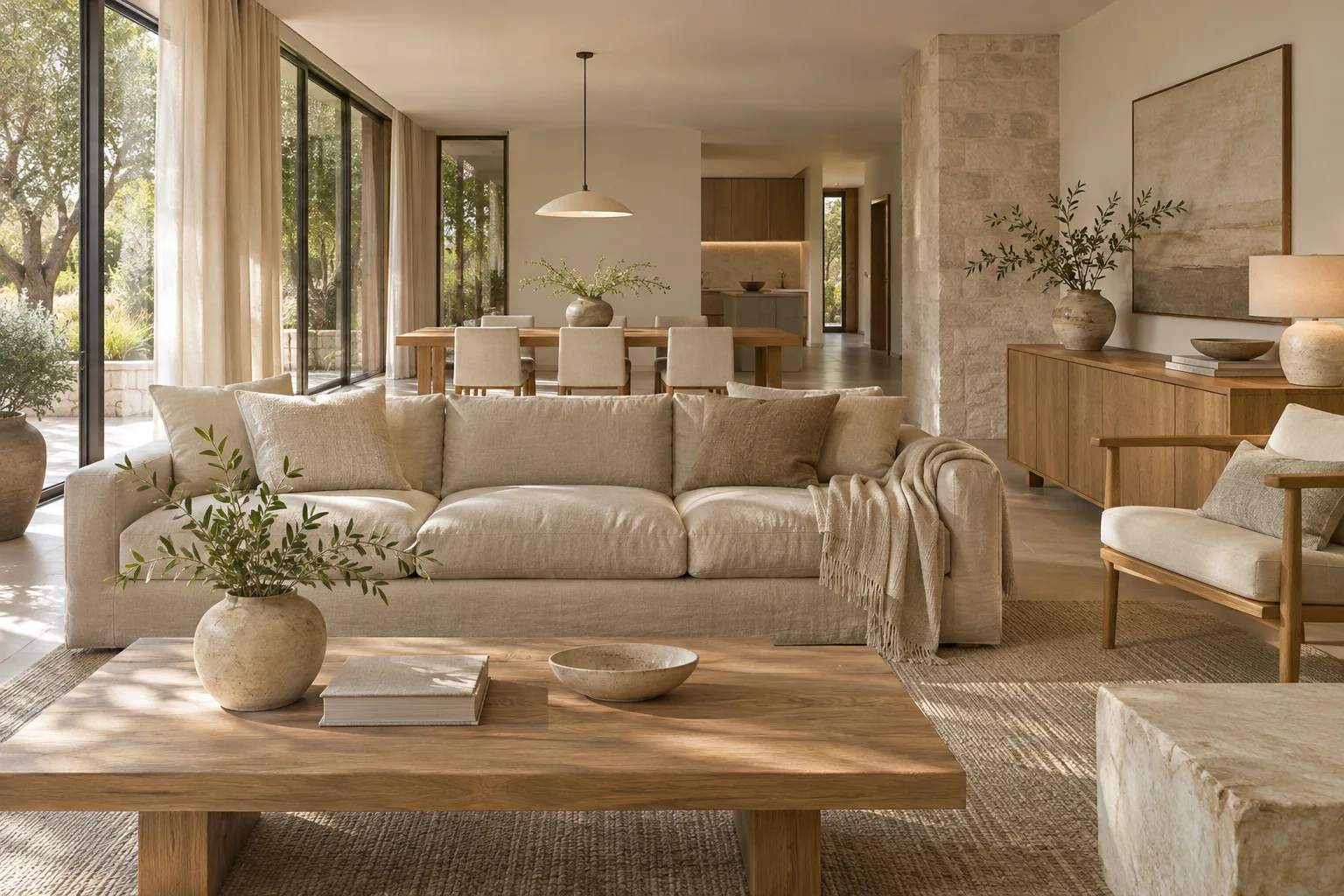
Choose the pieces that determine the rest of the room
Start with the items that have the greatest effect on layout and daily use. In a living room, that may be the main sofa. In a dining room, it is often the table and seating together. In a bedroom, the bed, mattress and bedside arrangement need to make a comfortable arrangement.
Give these purchases more attention than the accessories around them. Once the size, material and position of an important piece are settled, it becomes easier to choose rugs, occasional tables, lighting and smaller storage. Buying everything independently can leave you with several attractive pieces that compete for the same space.
If you are keeping furniture you already own, include it in the plan. Record its dimensions, photograph it in the room and bring a material reference where possible. A new dining table may need to work with existing chairs; a new bed may need to fit a mattress that has already been purchased.
Decide where custom furniture earns its place
Custom work is useful when a standard product cannot meet a real requirement. An unusually long wall, a difficult corner or a particular storage need can justify a made-to-measure piece. Changing a catalogue item simply because it can be changed may add drawings, samples and decisions without improving the room.
Separate essential changes from preferences. A cabinet that must fit an opening is different from a cabinet you would like slightly wider. Ask the supplier what changes to the construction, packing or assembly follow from the revised size. A wider tabletop, for example, may require a different base arrangement rather than a simple adjustment to the top.
| Purchase type | Useful when | Decision to settle first |
|---|---|---|
| Standard catalogue piece | The dimensions, finish and function already suit the room. | Confirm the quoted version and whether the displayed item represents current production. |
| Adapted catalogue piece | You like the construction but need a different fabric, finish or supported size. | List the changes and ask which sample or drawing will confirm them. |
| Made-to-measure item | A fitted location or design requirement cannot be met by the available range. | Resolve the design, site dimensions and approval process before manufacturing. |
| Local purchase | You need an exact local product, easy replacement or a service supplied at the destination. | Keep its dimensions and finish in the overall room plan. |
For a detailed custom brief, use our guide to custom production in Foshan. For a home bar cabinet, include the appliances and storage you actually intend to use, not only an exterior photograph.
Choosing materials for luxury furniture
A luxury room does not require every surface to be its most elaborate version. Decide where the eye should go and which materials people will touch most often. The sofa upholstery, dining tabletop and cabinet handles may deserve more consideration than a rarely used occasional piece.
Limit the number of competing finishes before visiting suppliers. Identify the principal wood tone, the metal finish and the main upholstery family. Then decide where contrast is intentional. A dark timber dining table beside lighter cabinetry can work well when it is a deliberate choice; two almost-matching wood finishes may be more distracting.
Look at the materials as a group in useful light. Review sheen as well as colour. A polished surface and a matt one can look different even when the supplier gives them the same colour name. Ask what the finish sample represents and whether natural variation is expected in the proposed material.
For prominent stone pieces, go beyond a small colour reference. The natural marble buying guide explains the decisions around slab selection and fabrication. For soft furnishings, our rug guide covers the sample and sizing questions that affect the finished room.
Allocate the budget by use, not just by room size
A guest bedroom and a main bedroom may be similar in size but serve very different routines. List which rooms are used every day, which receive visitors and which can be finished later. This helps you protect the purchases that matter when the first complete quotation arrives.
Use three decisions beside each item: keep the selected specification, consider an alternative, or postpone. If the total needs to come down, ask for alternatives against the same functional requirement. Reducing the number of decorative pieces is a different decision from changing the construction of a frequently used chair.
- Keep: items whose comfort, fit or function is central to the home.
- Compare: items where another material or a standard size may still achieve the intended result.
- Postpone: pieces you can choose after living in the space without disrupting fitted work.
Keep a separate allowance for the work and purchases that happen at the destination. Local installation, handling equipment, window measurements and the final position of fitted products should not disappear simply because the furniture quotation looks complete.
Check the home as someone will actually use it
Walk through ordinary activities on the plan. Can a person pull out a dining chair while someone passes behind it? Can bedside drawers open beside the bed? Is there a practical place for lamps, chargers and the objects normally left on a console? Your designer can help resolve these relationships before individual products are approved.
Think about cleaning and maintenance too. Ask how cushion covers are removed, how a dining surface should be cleaned and which parts can be replaced. For a home with children, pets or frequent guests, discuss the actual use with the supplier instead of relying on a general description such as family-friendly.
Consider occasional needs without allowing them to dictate every purchase. An extendable table needs space in its open position. A sofa bed needs a clear opening area. Show both arrangements on the plan if those functions are important to you.
Review the complete selection before placing the remaining orders
Before the last purchases are confirmed, put one current image of every selected piece beside the room plan. Include the approved finish references, the total quantity and a clear note for anything still undecided. This final review is where an extra side table, a missing bedside lamp or an unresolved cabinet finish often becomes obvious.
Ask one person to collect final decisions from the household and designer. Different people can review comfort, appearance and installation, but suppliers need one clear answer for each item. Keep optional alternatives out of the approved order until they have actually been selected.
Should I buy every item from one supplier?
One supplier can make coordination simpler when its range fits the project. Several specialists may offer a better match across upholstery, cabinetry, stone and lighting. Compare the actual range and responsibilities, then decide how the different orders will be brought together.
What if the house is not ready when the furniture is finished?
Discuss this before ordering. Identify where finished goods can remain, who is responsible for them and what storage or rescheduling arrangements apply. Review the delivery plan again when the construction programme changes.
Send us the rooms you want to furnish, the pieces you are keeping and the decisions that are still open. We can discuss a buying visit or a remote selection process around that brief. The buyer resources provide practical formats for keeping the choices together.
Check how your purchases work together
Buying each piece separately can leave small mismatches that only become obvious at home. Review the connections between products while you still have time to clarify sizes and finishes with suppliers.
Furniture that shares a space
Check the dining table with the chairs, the bed with the mattress and the sofa with nearby tables. Compare actual dimensions and clearances rather than relying on how a showroom is arranged.
Finishes from different suppliers
Keep selected fabric, wood, metal and surface references together. Similar colour names do not establish that two suppliers are offering the same finish.
Items that depend on the building
Separate fitted purchases from loose furniture. Ask your designer or installer to resolve site measurements, service connections and access before approving production.
Bring these questions on your buying trip so you can compare the important details in person.
Plan your furniture buying tripTell us what you are planning
Send your floor plan, room list, inspiration photos, approximate budget and destination. Tell us whether you plan to visit Foshan or buy remotely.
Planning your purchase
Use room codes when items repeat
For several bedrooms, apartments or similar homes, give each room type a code. Record the furniture and material schedule for that type, then multiply only the items that are identical. Keep handed layouts, different dimensions and optional pieces visible.
Approve a representative sample or room package before repeating it across the project. A change to a handle, fabric or cabinet dimension should be traced to the affected rooms and purchase-order lines.
Plan arrival around installation
Identify which rooms or buildings will be ready first. Ask suppliers to label items by room, unit or installation area and keep that reference on the packing list. Discuss whether a phased shipment is useful after comparing its extra handling and freight costs.
Your installer should confirm access, measurements and interfaces before made-to-measure items enter production. Keep goods that are ready separate from goods approved for dispatch.
Use our furniture sourcing checklists and project templates.